
The question what is the cost per square meter of construction in 2026? is among the most frequently researched topics by a wide range of people, from landowners looking to build a home to investors. Rising material prices, labor costs, and economic fluctuations reshape construction costs per square meter every year. So, what is the cost per square meter for building a house or a building in 2026, and how is this cost calculated? The construction cost per square meter consists of the total of many items, such as rough construction, finishing work, electrical and mechanical installations, labor, project expenses, and official fees. In this article, we will discuss the current construction costs per square meter for 2026, the factors influencing these costs, and the correct calculation methods in detail.
What Is the Cost Per Square Meter?
The cost per square meter is the unit cost derived by dividing a building’s total construction expenses by its total construction area. As one of the most fundamental indicators in budget planning within the construction industry, this calculation reveals the average cost per square meter. For landowners planning to build a home, investors, and contractors, the cost per square meter serves as a critical reference for assessing a project’s feasibility and estimating the total budget.
The cost per square meter is not composed solely of rough construction expenses such as concrete and rebar. Many items are included in this calculation, such as labor costs, finish work (including tiles, paint, doors, and kitchen cabinets), electrical and mechanical systems, insulation work, and project and permit fees. Additionally, the city where the building is located, the soil conditions, the number of floors, and the quality of materials used directly affect the unit cost. Therefore, the cost per square meter is not a fixed figure; it is a dynamic value that varies depending on the project, quality standards, and market conditions.
Accurately calculating the cost per square meter ensures budget control during the construction process, minimizes the risk of cost overruns, and helps provide a clearer picture of the investment’s profitability. For this reason, not starting a project without a professional cost analysis is one of the most important steps in sound construction planning.
How Is Cost Per Square Meter Calculated?
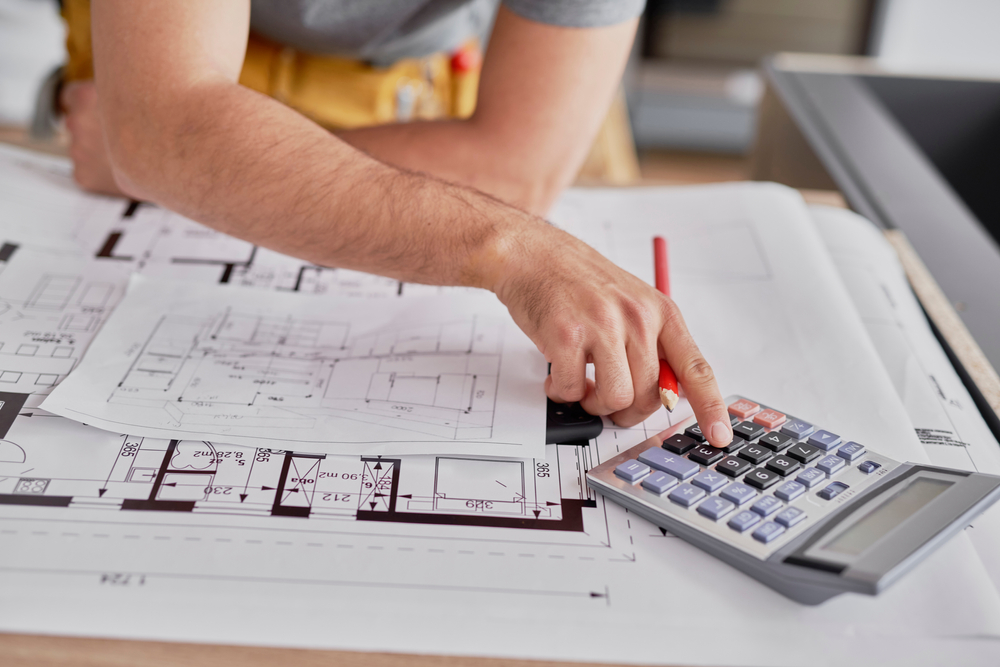
Calculating the cost per square meter is one of the most important steps in accurately planning the budget for a construction project. To make an accurate calculation, the total construction cost of the building must first be clearly determined. This cost consists of the sum of all items, including rough construction expenses, finish work, labor costs, plumbing and electrical systems, and project and permit fees. The total cost is then divided by the building’s total gross floor area to determine the cost per square meter.
The calculation logic is quite simple: The higher the total expenditure and the smaller the total construction area, the higher the cost per square meter. However, what is important here is that all cost items are fully included. In addition to rough construction materials such as concrete, rebar, and brick, finishing materials such as ceramic tiles, hardwood flooring, kitchen cabinets, doors, and paint must also be factored in. Additionally, expenses such as electrical and mechanical systems, waterproofing, thermal insulation, roofing work, elevators (if applicable), architectural drawings, site surveys, construction supervision, and permit fees are all part of the total cost.
When calculating the cost per square meter, the gross floor area is typically used as the basis. Gross area includes not only the interior living space of the unit but also stairwells, elevator shafts, columns, and common areas. Therefore, calculations based on net area can be misleading. Additionally, the land cost is often not included in the cost per square meter. This is because the cost per square meter reflects the construction expenses of the building, whereas the land cost is evaluated separately within the total investment budget.
Accurate per-square-meter cost calculations ensure budget control at the start of the project and minimize potential cost increases in later stages. Given the rise in material and labor costs in 2026, conducting a detailed and professional cost analysis is of the utmost importance. Therefore, performing a comprehensive site survey and planning all expense items before construction begins is a critical step for a sound investment process.
What Is the Cost Per Square Meter in 2026?
In 2026, construction costs per square meter have risen compared to previous years due to increasing material prices, labor costs, and economic conditions. In particular, increases in the costs of steel, concrete, cement, energy, and transportation are directly affecting unit costs in residential and commercial construction projects. Therefore, knowing the current per-square-meter costs is of great importance for budget planning for those planning to build a home or building in 2026.
As of 2026, the cost per square meter for average residential construction varies depending on the type of building and quality standards. While the cost per square meter for residential projects using standard materials and mid-range workmanship remains at more affordable levels, the quality of materials and architectural details used in luxury-segment projects significantly increase costs. In particular, elements such as villa projects, high-ceiling designs, custom facade designs, and smart home systems drive up the unit cost.
However, the cost per square meter also varies by city. Since labor costs and logistics expenses are higher in major cities, the cost per square meter is higher there compared to cities in Anatolia. Additionally, factors such as the condition of the site, the number of floors, the presence or absence of a basement, the elevator system, parking space, and social amenities also affect the total cost.
Rather than providing a specific figure for 2026, it is a more prudent approach to assess costs based on quality class. There can be significant price differences between projects in the economy segment and luxury residential projects. Therefore, the most accurate cost information can only be determined following a detailed site survey and technical analysis of the proposed project.
In summary, construction costs per square meter in 2026 vary depending on the type of project, quality standards, city, and market conditions. Having a professional cost analysis conducted before starting construction is critical for budget control and sound investment planning.