

Epoxy, a material increasingly used in both industrial and personal projects, is a type of thermoset polymer that stands out for its excellent adhesive properties, high durability, and versatility. Whether for small home repair projects, artistic endeavors, or industrial applications, let’s take a look at the wide range of uses offered by epoxy resins and explore why this material has become so popular. What is epoxy? What is epoxy resin used for? Let’s find out together.
What Is Epoxy?
Epoxy is a two-component resin system and belongs to the family of thermosetting polymers. This system typically consists of a resin and a hardener. When these two components are mixed, a chemical reaction begins, resulting in a hard, durable, and usually transparent solid.
Epoxy resins are used in a variety of applications due to their excellent bonding properties, high mechanical and thermal durability, and chemical resistance. These properties give epoxy a wide range of applications, from the construction sector to the automotive industry, and from electronics to art and crafts. For example, they are used in floor coatings, adhesives, the production of electronic circuit boards, and even in jewelry making.
Epoxy resins are also preferred for decorative purposes due to their excellent surface coating properties. Their transparency and ability to be colored make them a popular choice for artistic projects and DIY (do-it-yourself) projects.

What Is Epoxy Resin Used For?
Epoxy resin stands out as a valuable material in many different fields due to its versatility. Here are some common applications of epoxy resin:
Use as an Adhesive: Epoxy resin is used to strongly bond various materials, such as metal, glass, stone, wood, and plastic. This property makes it ideal for industrial repair work and small repairs around the house.
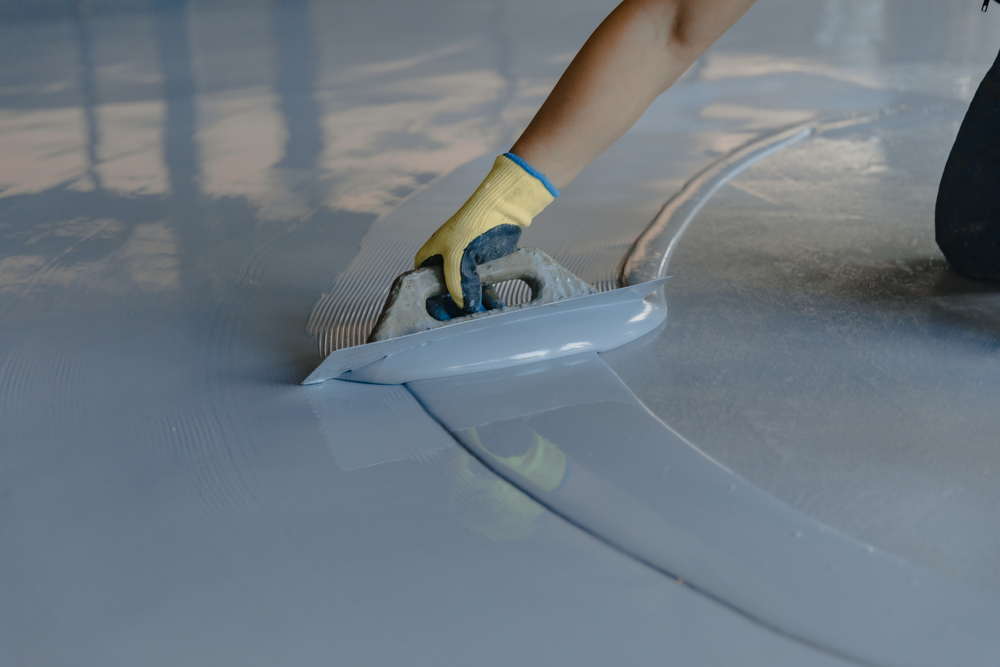
Floor Coatings: Epoxy-based floor coatings used in industrial and commercial spaces are preferred for their durability, chemical resistance, and ease of cleaning.
Arts and Crafts: Epoxy resin is used in jewelry making, artistic paintings, and furniture decoration. Its colorable and transparent nature allows artists and hobbyists to create aesthetic and creative works.
Electronics and Electrical Industry: Epoxy resins are used to protect circuit boards and other electronic components due to their electrical insulation properties and heat resistance.
Automotive and Aerospace Industries: Thanks to its lightweight and durable structure, epoxy is frequently used in the production of automotive and aircraft components.
Marine Applications: In ship and boat construction, epoxy resin provides excellent protection against water and enhances structural integrity.
Protective Coatings in the Construction Industry: Used in the protective coatings of structures such as bridges, dams, and buildings, they extend the lifespan of these structures.
This versatility is one of the reasons why epoxy resin is a popular choice in both professional settings and personal projects. Its durability, flexible application methods, and aesthetic versatility make epoxy resin a highly valuable material.
How to Use Epoxy Resin?
The use of epoxy resin is a process that requires particularly careful preparation and application. Before beginning, the surface to be treated must be clean, dry, and smooth; any dirt, grease, or dust must be completely removed. If there is an old coating or paint on the surface, it must also be sanded off.
Epoxy resin and hardener should generally be mixed in equal proportions, though this ratio may vary depending on the product’s instructions. The mixture should be stirred carefully until it becomes homogeneous, and it is important to use it within a certain time frame once it is prepared. Application can be done using a brush, roller, or putty knife, and a dropper or syringe may be preferred for more precise work.
A heat gun or hair dryer can be used to remove air bubbles that may form on the resin surface. This process gently heats the surface, causing the air bubbles to rise to the surface and burst. It is important to allow sufficient time for the epoxy resin to fully cure; this process can take anywhere from a few hours to a few days. Once cured, the surface can be sanded or otherwise treated as needed. The use of epoxy resin is a method that offers both practical and aesthetic results, and when applied correctly, it produces highly durable and attractive surfaces.