
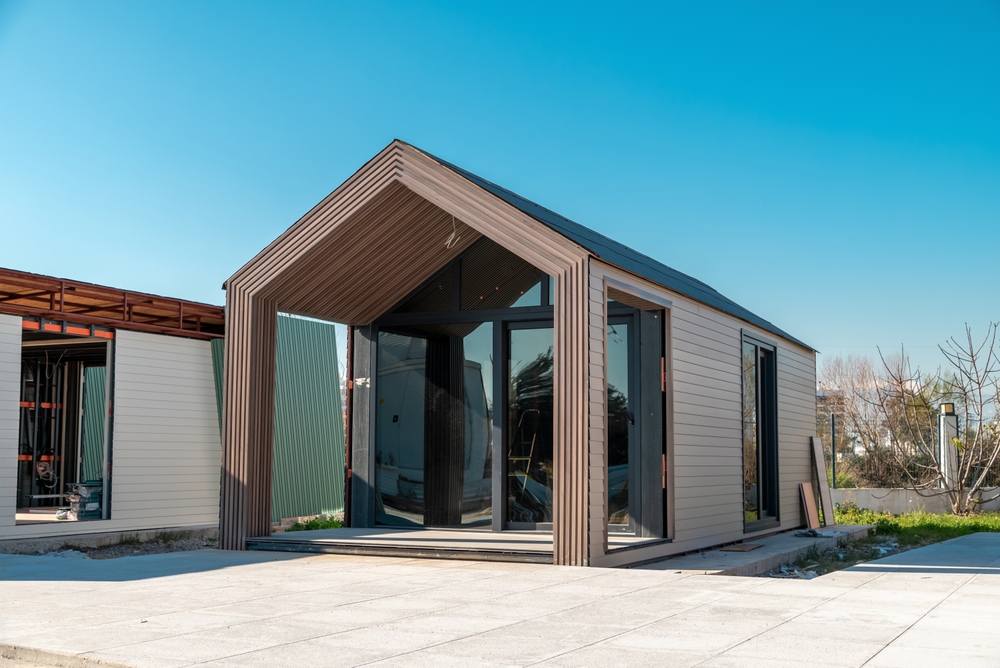

As interest in fast, economical, and practical building solutions continues to grow day by day, prefabricated homes are emerging as a modern alternative to meet this need. Manufactured in a factory setting and assembled on-site in a short time, these structures stand out for offering both time and cost advantages. So, what exactly is a prefabricated home, how is it constructed, and in what ways does it differ from traditional reinforced concrete structures? In this article, we will thoroughly examine the fundamental characteristics of the prefabricated building system, the production and installation process, and the differences between prefabricated and reinforced concrete structures, helping you determine which option is best suited for you.
What Is a Prefab House?
A prefabricated house is a modern type of housing constructed by manufacturing structural components in a factory setting and then transporting them to the site for rapid assembly. In these homes, wall panels, roofing systems, load-bearing elements, and other structural components are manufactured under controlled conditions and then assembled on-site to make the structure ready for use. This method offers a much faster installation time compared to traditional construction processes and minimizes labor errors.
Prefabricated houses are usually built using steel or light-frame construction systems and can be designed as single-story or multi-story structures to meet different needs. These structures, which can be manufactured using advanced materials for thermal and sound insulation, also offer both aesthetic and functional solutions. Due to their affordability, quick delivery, and wide range of design options, prefabricated houses have become increasingly popular in recent years and are suitable for both vacation homes and permanent residences.
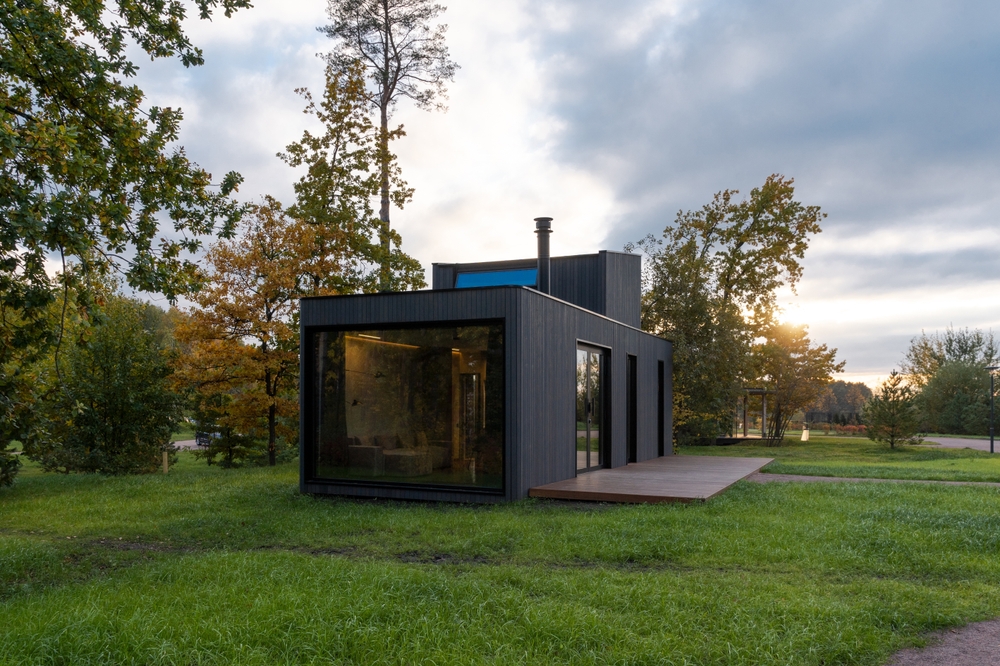
How Is a Prefabricated House Built?
The prefabricated house construction process is a system that proceeds in a more organized, faster, and controlled manner compared to traditional construction methods. This process typically begins with the design phase. First, the number of stories, the number of rooms, the intended use, and aesthetic expectations are determined. Architectural drawings are then prepared to meet these needs, and technical details are finalized. This stage is crucial for ensuring that the prefabricated house is both functional and comfortable.
Once the project is completed, the production process begins. The wall panels, structural steel system, roof components, and other structural elements of the prefabricated home are manufactured in a factory setting. Since this production is independent of external factors, it is carried out with a high degree of precision and quality. Additionally, this method reduces material waste and minimizes the margin of error. Once all components are ready, they are shipped to the construction site.
During the on-site phase, the first step is to prepare the site, which typically involves pouring a concrete foundation. This foundation ensures that the structure sits securely and remains stable. Next, the prefabricated components are assembled in the planned sequence. Wall panels are installed, the roof system is erected, and doors and windows are fitted. Electrical and plumbing systems are also integrated during this phase, making the home ready for occupancy.
One of the most notable features of prefabricated houses is that the entire process can be completed in a very short time. While the construction process for traditional reinforced concrete structures can take months, it can be completed in just a few weeks for prefabricated structures. Additionally, since the majority of production takes place in a factory setting, quality standards are easier to maintain. As a result, prefabricated homes have become one of the increasingly preferred modern building solutions today, offering the advantages of quick installation, cost-effectiveness, and practical usability.
What Are the Advantages of a Prefabricated House?
Prefabricated homes have become increasingly popular in recent years because they offer practical solutions that align with the fast pace of modern life and economic expectations. Offering numerous advantages over traditional construction methods, these systems present an attractive option for both individual homeowners and investors. One of their most significant advantages is the rapid installation process. Thanks to components pre-manufactured in a factory setting, the installation of a prefabricated home can be completed within weeks. This results in significant time savings.
Another key advantage is cost control. Since the production process for prefabricated homes is well-planned and standardized, the likelihood of encountering unexpected costs is quite low. Additionally, the shorter construction time helps keep the total cost more economical. Furthermore, the minimal waste of materials also offers a budgetary advantage.
Prefabricated homes also stand out for offering flexible design options. They can be built as single-story, duplex, or other layouts depending on needs and can be expanded later. Additionally, since the structural components are manufactured in a factory according to specific quality standards, the production process is more controlled and reliable. This ensures more consistent construction quality.
Prefabricated homes have also made significant advancements in thermal and sound insulation. With the right materials, they can provide a living space that stays cool in the summer and warm in the winter. Their high energy efficiency leads to long-term savings. Additionally, their lightweight construction allows them to withstand natural disasters such as earthquakes, which is a significant safety advantage.
Prefabricated homes also stand out for their eco-friendly design. The production process generates less waste, and the environmental impact is kept to a minimum. When all these advantages are considered together, prefabricated homes emerge as a cost-effective and functional housing option.
What Are the Differences Between Prefabricated and Reinforced Concrete Buildings?
Prefabricated and reinforced concrete buildings are two systems that differ significantly from one another in terms of construction technology and the building process. These differences are evident in many aspects, including production methods, cost, durability, construction time, and usage characteristics. To make the right choice, it is essential to have a clear understanding of the fundamental differences between these two types of structures.
One of the most notable differences is the construction process. Prefabricated homes are completed quickly by assembling components that are manufactured in advance in a factory setting. Reinforced concrete structures, on the other hand, are built entirely on-site, step by step, through the stages of formwork, rebar installation, and concrete pouring. As a result, while prefabricated structures can be completed within weeks, reinforced concrete buildings typically require a process that takes months.
From a cost perspective, prefabricated homes are generally more economical. The standardized and planned nature of production, the shorter construction time, and minimal material waste provide a cost advantage. In reinforced concrete structures, however, labor, time, and material costs can be higher. Additionally, there is a risk that costs will increase as the construction process drags on.
When it comes to durability and longevity, these factors can vary depending on the intended use. Reinforced concrete structures can be extremely durable and long-lasting when constructed with proper engineering and high-quality materials. Although prefabricated structures have become quite durable thanks to modern technologies, they are generally not considered to have the same longevity as reinforced concrete structures. However, in situations such as earthquakes, the flexibility of prefabricated structures can be an advantage.
Prefabricated homes stand out for their flexibility and portability. They can be dismantled and moved to another location as needed, or additions can be made to the structure. Reinforced concrete buildings, on the other hand, are permanent structures, and making changes to them later is more difficult and costly.
In terms of insulation and comfort, both systems can deliver good results when properly installed. However, thanks to the modern panel systems used in prefabricated buildings, thermal and sound insulation have reached quite high levels. In reinforced concrete buildings, on the other hand, insulation depends entirely on the installation.
When choosing between prefabricated and reinforced concrete structures, factors such as budget, time, intended use, and expectations should be taken into account. While prefabricated homes may be advantageous for those seeking a quick, economical, and practical solution, reinforced concrete buildings may be a more suitable option for those seeking a durable, traditional structure.